
01
Track the ball path
We check where the ball travels most often and which side needs height.
Service Detail
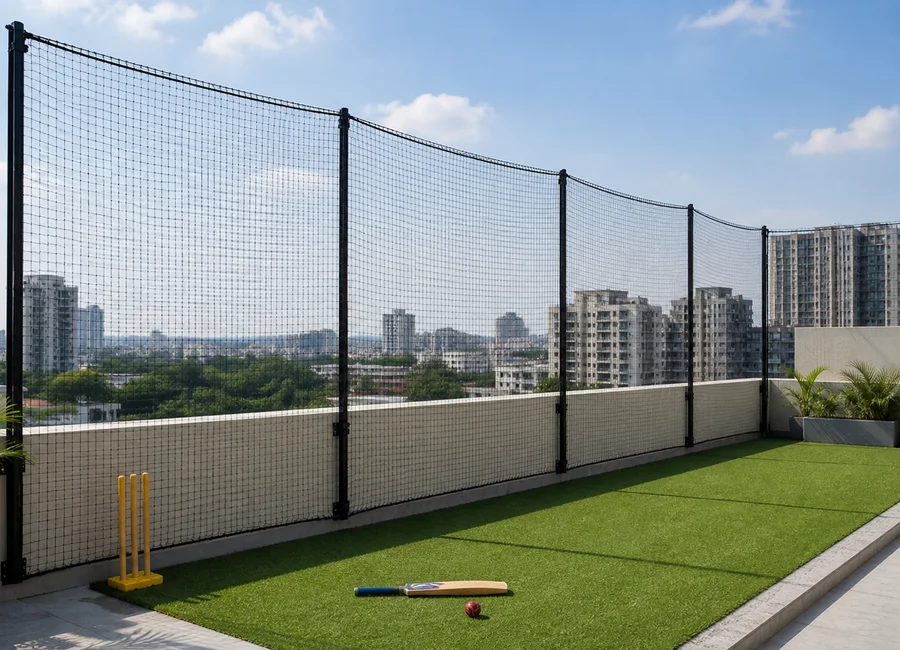
Ball stop nets are planned from the way the game is played. Direction, height, ball speed, and surrounding objects decide the layout.
A simple safety net is not enough for repeated impact. The support line, net thickness, and fixing strength all matter.
The best setup controls the risky side while keeping the play space comfortable and easy to maintain.
What to share
Send one wide photo, one close photo of the fixing side, and a short note about the main concern.
Best For
Terrace cricket and practice corners
Play edges near glass, parking, or walking paths
Single-side ball control
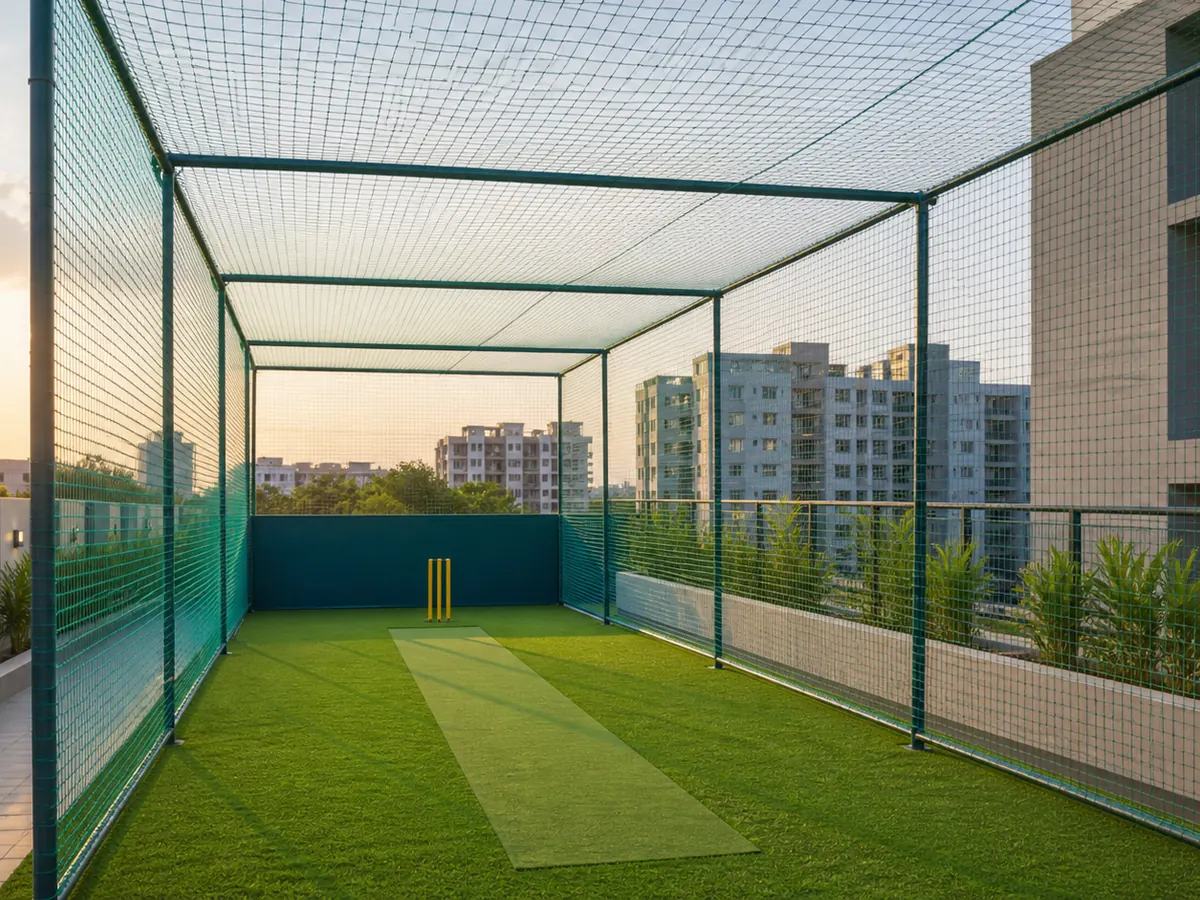
Compact training spaces with repeated impact
Process
01
We check where the ball travels most often and which side needs height.
02
Poles, parapets, walls, and possible frames are reviewed before net size is decided.
03
The net and border are planned for repeated hits, not only for visual coverage.
04
The final layout is checked against play direction and movement around the space.
Materials
Chosen for repeated ball impact and a more controlled practice setup.
Keeps the net line steady across wider spans and taller openings.
Used when the space does not have enough safe fixing points.
Selected according to surface strength, height, and expected impact.
Compare
| Option | Works For | Note |
|---|---|---|
| Ball stop net | Sports impact and stray-ball control | Best when direction and height matter. |
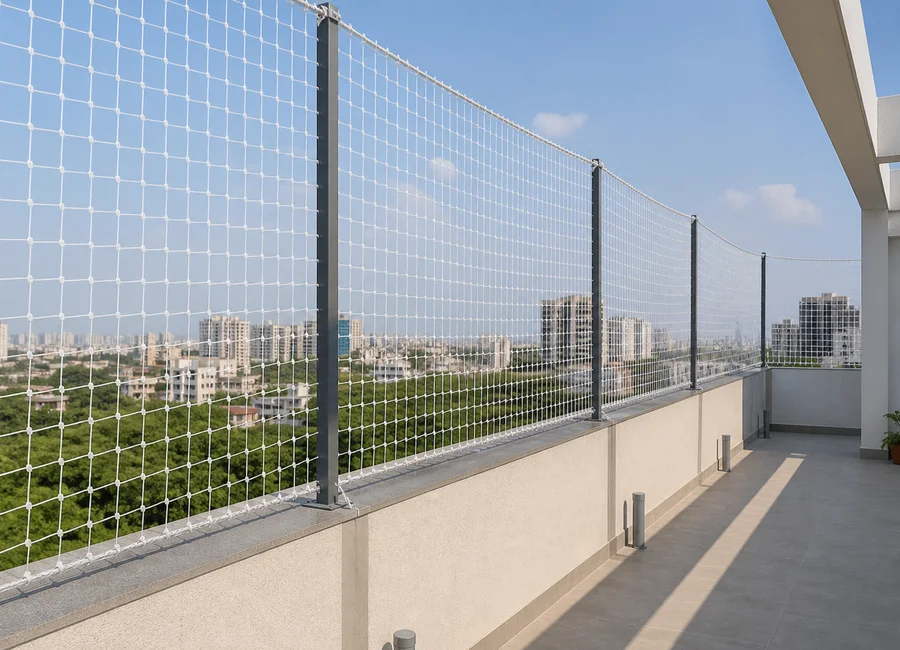
| Terrace safety net | Edge coverage for movement near open sides | Not planned for repeated ball impact. |
| Full enclosure | High-frequency practice | More coverage, but it may reduce usable space. |
Before Booking
Ball direction matters more than the number of open sides.
Repeated impact needs stronger planning than ordinary netting.
Nearby glass and parking change the recommended height.
A focused barrier can be better than enclosing everything.
Related Work
Questions
Yes. Cricket needs suitable net thickness, height, and support for repeated impact.
Not always. If the ball mostly escapes one way, one focused side can work well.
Height depends on ball direction, speed, distance from the edge, and what needs protection.
Some layouts can be planned that way, depending on supports and how often the space is used.
Send the play space, the likely ball direction, open sides, and possible support points.