
01
Find the entry route
We check the shaft mouth, pipe runs, corners, and ledges before deciding where the net should sit.
Service Detail
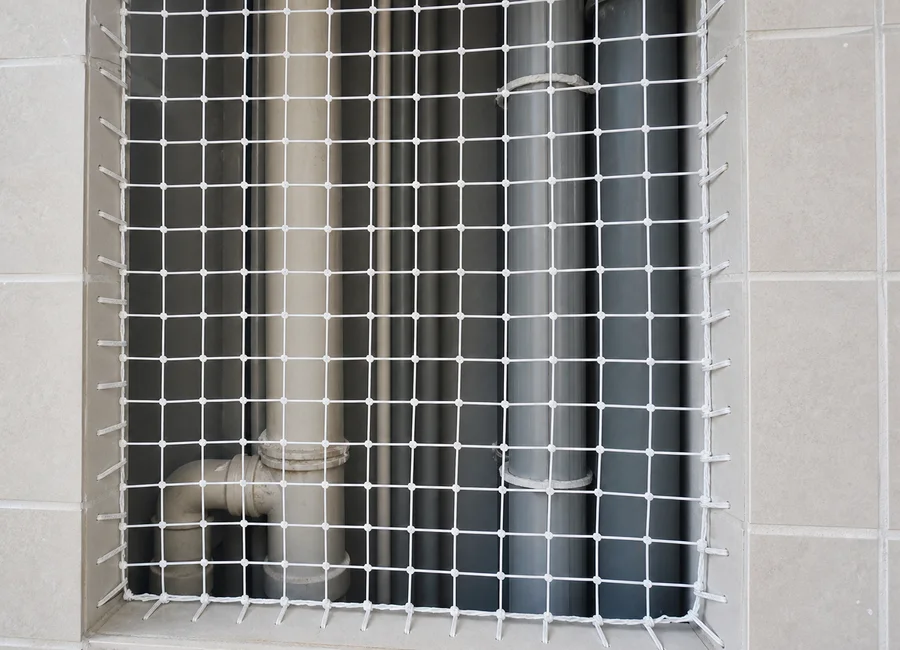
Duct openings collect more trouble than people expect. Birds, dry leaves, dust, and loose debris can enter through small gaps around pipes or shaft edges.
A good duct net is planned around the route of entry, not only the visible dirty patch. Pipes, brackets, exhaust lines, and cleaning reach all matter.
The finish should be tight around the border, neat near pipe cuts, and practical enough for future maintenance.
What to share
Send one wide photo, one close photo of the fixing side, and a short note about the main concern.
Best For
Open service shafts with bird or debris entry
Pipe gaps that need clean cut-and-tie work
Utility pockets that should remain ventilated
Hard-to-clean corners behind balcony or kitchen lines
Process
01
We check the shaft mouth, pipe runs, corners, and ledges before deciding where the net should sit.
02
Openings around pipes are marked first so the net does not hang loose after fitting.
03
The net is tied across the usable edge with clean tension and no soft corner pockets.
04
Before finishing, we check whether cleaning or basic service work can still be handled.
Materials
Useful for service openings that need a stronger and more visible barrier.
Used when the opening should stay lighter from view while still closing entry gaps.
Keeps the edge stable around corners, pipe lines, and awkward shaft shapes.
Chosen after checking wall strength, tile edges, pipe spacing, and fixing reach.
Compare
| Option | Works For | Note |
|---|---|---|
| Duct area net | Open shafts, pipe gaps, and service pockets | Best when the entry point is wider than a narrow ledge. |
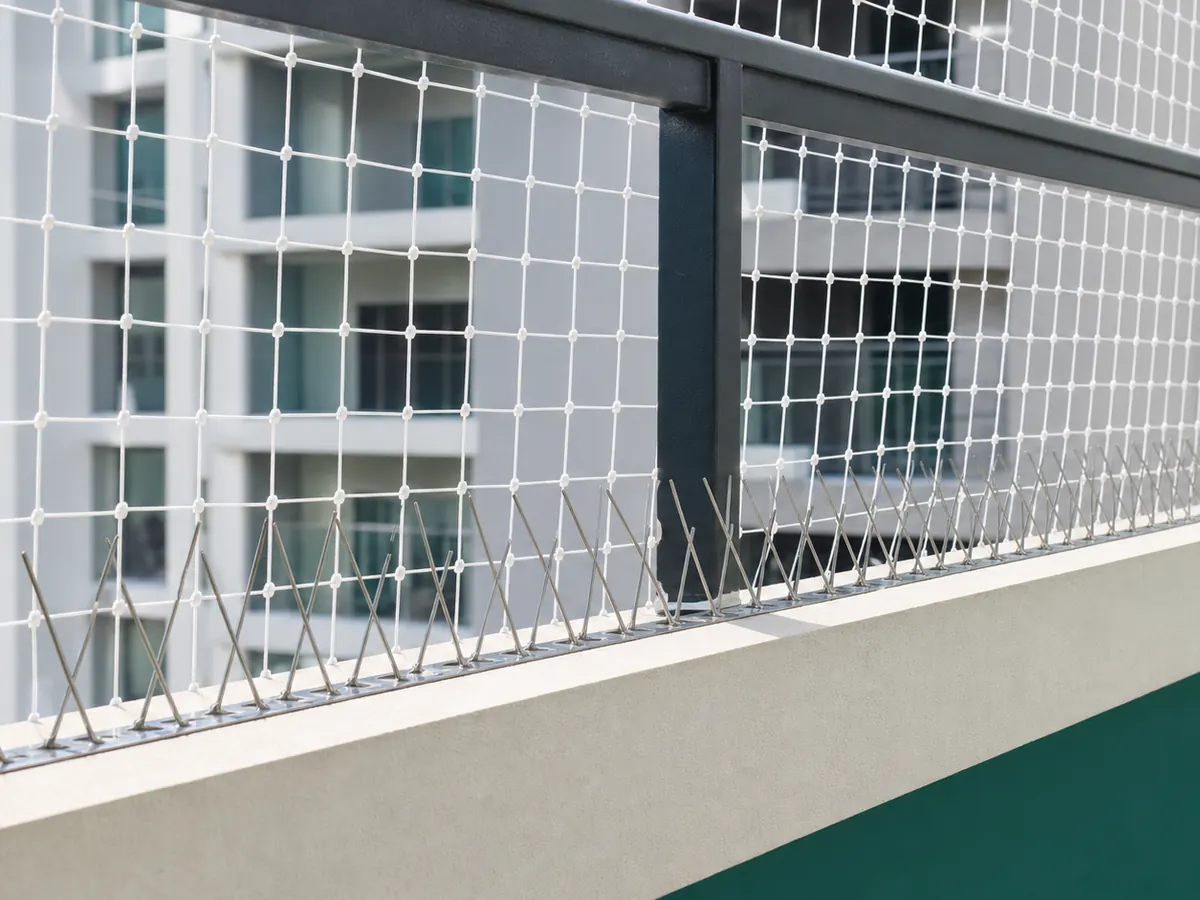
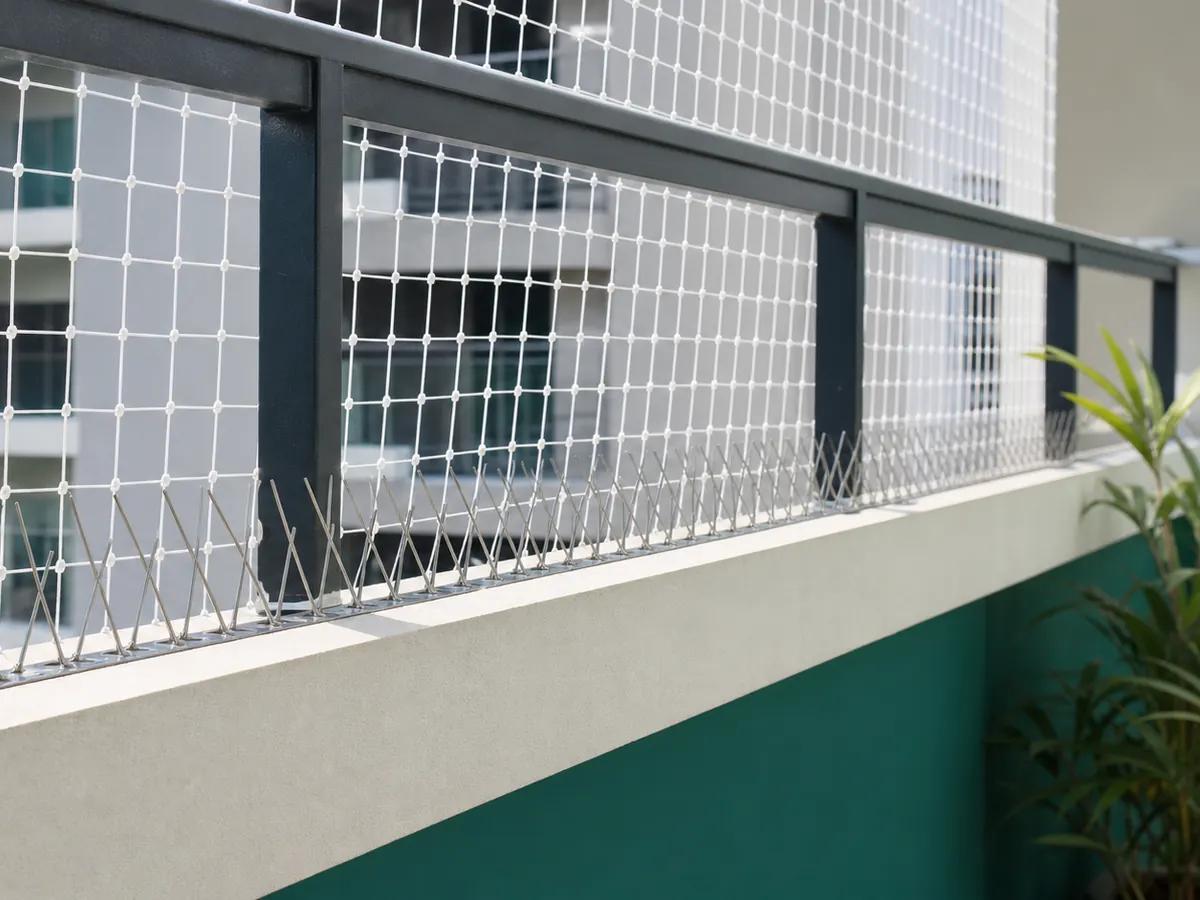
| Bird spikes | Thin ledges where birds only sit | Not useful when birds are entering the duct opening. |
| Solid covering | Non-ventilated closures | Can block airflow or future access if used in the wrong place. |
Before Booking
Pipe gaps need careful tying, not a stretched net over the top.
The opening should be checked before closing so nothing is trapped inside.
Access for cleaning or repair should be discussed before fitting.
Loose corners are the most common reason duct netting fails early.
Related Work

Questions
Yes. Pipe gaps are handled with cut-and-tie work so the edge does not stay loose.
Netting keeps airflow open in most layouts while stopping bird or debris entry.
That depends on the opening. Cleaning access is checked before deciding the final border line.
Use netting when birds or debris enter an open space. Use spikes when birds only sit on a narrow ledge.
Send one wide duct photo and close photos of pipe gaps, side corners, and the fixing surface.